The short answer
The best roofer is not automatically the cheapest roofer. Look for proof of licensing, insurance, local code knowledge, a complete written scope, and a warranty you can understand.
Roofing is a major home investment. Taking time to compare contractors before signing can help prevent unexpected change orders, permit problems, and warranty disputes later.
What makes a roofing contractor stand out?
South Florida roofing requires more than general construction experience. Heat, humidity, intense storms, coastal exposure, and local building requirements all affect the way a roof should be inspected and installed. Use this checklist when comparing your options.
Active license and insurance
Ask for current license information and proof of workers' compensation and general liability insurance. Do not rely on a verbal assurance.
Local certifications and code knowledge
Look for contractors who understand South Florida permitting, Miami-Dade product approvals, wind requirements, and the installation details for your selected system.
A detailed written estimate
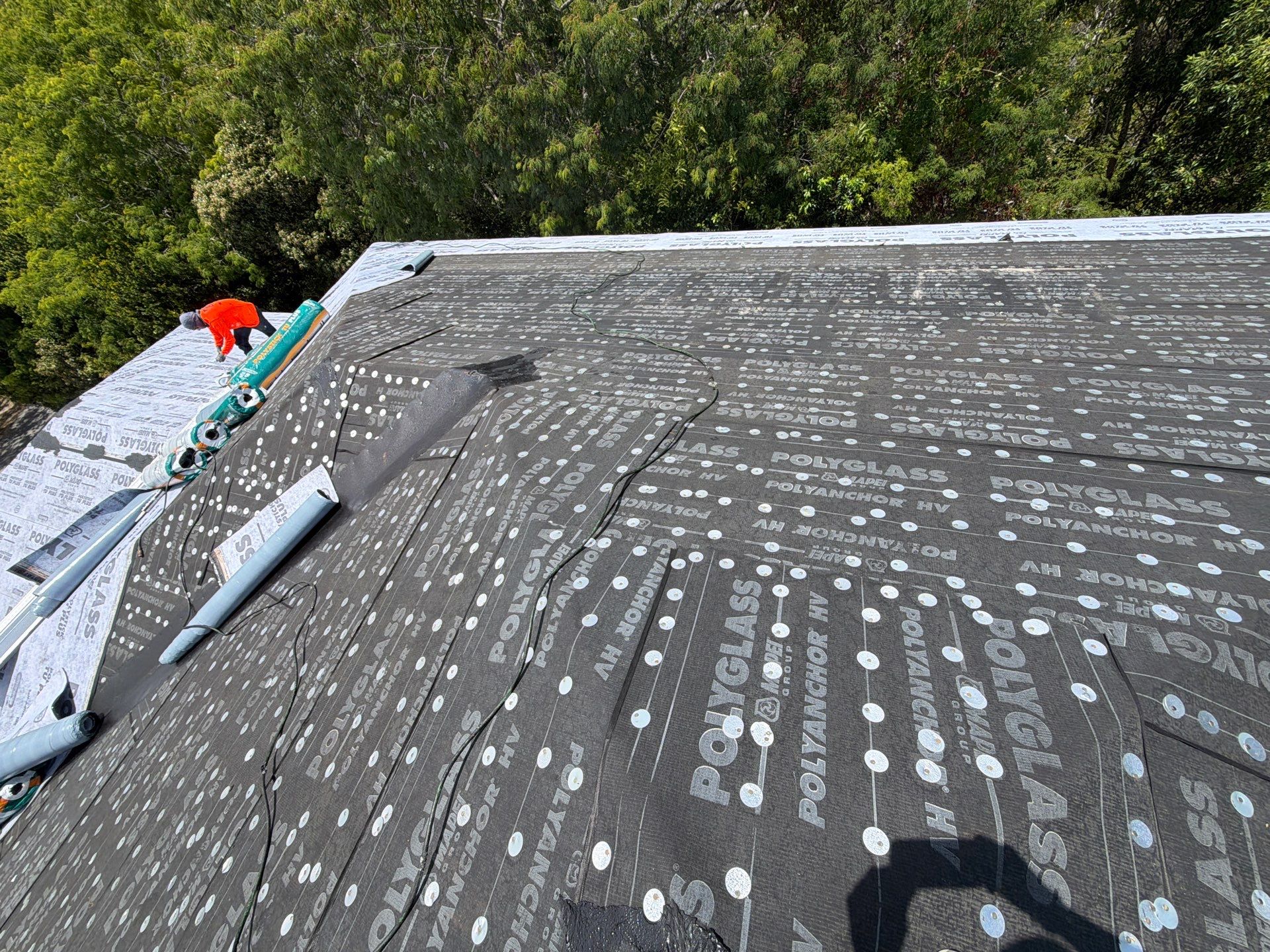
The proposal should identify materials, tear-off, underlayment, flashing, ventilation, permits, inspections, cleanup, warranty, and any exclusions.
A real workmanship warranty
Compare the length of the workmanship warranty and ask who is responsible if a problem appears. Manufacturer coverage and contractor workmanship coverage are different.
Relevant local project experience
Review recent projects similar to yours—tile, metal, shingle, flat, commercial, or HOA work—and ask how the contractor handled permits and inspections.
Clear communication
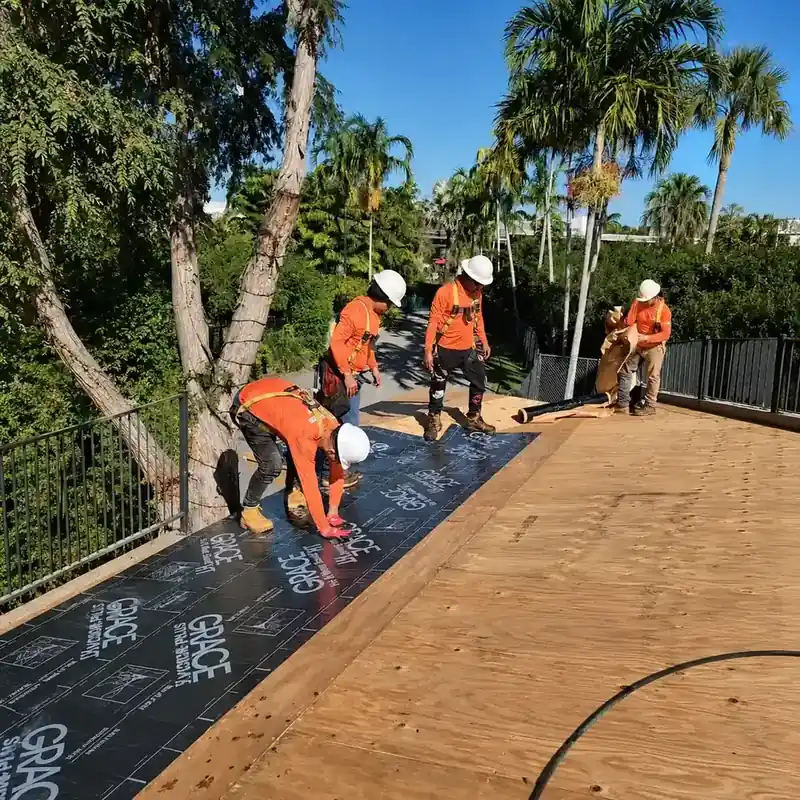
A strong contractor explains the condition of your roof, answers questions directly, keeps the job site organized, and gives you a clear point of contact.
Questions to ask before hiring
Who will pull the permits and schedule the inspections?
Which exact material, underlayment, flashing, and ventilation systems are included?
What happens if damaged decking is discovered after tear-off?
How long is the workmanship warranty, and who handles a warranty claim?
Can you show me recent projects similar to my roof?
What is the payment schedule, and is the final payment due only after completion and cleanup?
Red flags to avoid
- • A contractor who cannot provide license or insurance documentation.
- • A one-line quote with no material specifications or scope of work.
- • Pressure to sign immediately or pay the entire project upfront.
- • Requests to handle permits yourself when the contractor should be managing them.
- • A price that is dramatically lower than comparable itemized estimates.
Why local South Florida experience matters
A contractor who works regularly in the region is more familiar with the inspection process, storm-related documentation, local product approvals, HOA requirements, and the materials that perform well in South Florida's climate. Ask how the company handles your city or county before you commit.
Frequently asked questions
How do I find the best roofers in South Florida?
Verify the appropriate license and insurance, ask for relevant project evidence, and compare itemized scopes, local requirements, communication, and written warranties. No single rating or low price replaces those checks.
What should a roofing contractor's written estimate include?
The proposed system, removal, underlayment, flashing, deck repair terms, permits, disposal, payment schedule, warranty terms, and exclusions should be clear enough to compare with another proposal.
How can I check a roofer's claims?
Request current documentation and verify it independently with the issuing authority, insurer, or manufacturer where appropriate. Review customer feedback critically and ask for relevant work rather than relying on unsupported superlatives.
Are manufacturer and workmanship warranties the same?
No. They may cover different issues and have different eligibility, exclusions, and responsibilities. Ask for the actual terms applicable to the proposed roof, in writing.
Compare your roof with a free inspection
Get a written assessment and an itemized estimate from a GAF Master Elite roofing team serving South Florida.