Avoid Leaks: Roof Debris Safety for Homeowners, Same Day Inspections
Most homeowners can handle light roof debris removal themselves. Raking leaves and pine needles with a telescoping tool from the ground, blowing off surface litter, and clearing gutters are all safe when the roof is dry, low-pitched, and reachable without climbing onto it. Call a licensed contractor like Top Florida Roofing the moment you see moss, standing branches, a steep or wet roof plane, or any sign of leaking. They’ll inspect it, document it with photos, and clear it without putting you on a ladder over a hazard.
TL;DR: Homeowners can safely remove light debris using ground tools if the roof is dry, low-pitched, and free of moss or leaks, but heavy or steep roofs require professional help. Debris traps moisture that accelerates roof deterioration, causes backup, and can lead to leaks, especially if gutters or valleys clog with leaves or moss. Clear valleys and gutters first, use a telescoping rake from the ground, and avoid pressure washers, as high pressure damages shingles and shortens roof lifespan. Regular ground-level debris removal during peak leaf season prevents buildup, reduces cleanup time, and helps maintain proper drainage and roof health. Professional debris removal includes inspection, photo documentation, gentle hand clearing, gutter flushing, and optional repairs, with costs generally lower than major storm damage repairs.
TL;DR:
Leaves, pine needles, and moss don’t just sit on a roof. They trap moisture against the shingle surface, and that trapped water accelerates rot, granule loss, and algae growth far faster than plain rain exposure does. Roofing contractors who track this consistently find that debris left in valleys and gutters causes water to back up rather than drain, and that backup is often what turns a small leak into a ceiling stain, according to a a local roof-debris safety guide.
Watch for these warning signs on your next walk around the house:
Blocked drainage is not a cosmetic problem. The National Weather Service’s guidance on roof ice dams shows how backed-up water and ice on a roof surface can escalate into structural damage when it has nowhere to go, a risk that starts with something as simple as an unswept valley.
Before you grab a ladder, run through this. It takes two minutes and can save you a fall, a torn shingle, or a bigger repair bill.
If two or more of these raise a flag, stop and call a contractor. Take a few photos first. Photo documentation, before and after, protects you if you end up filing an insurance claim later.
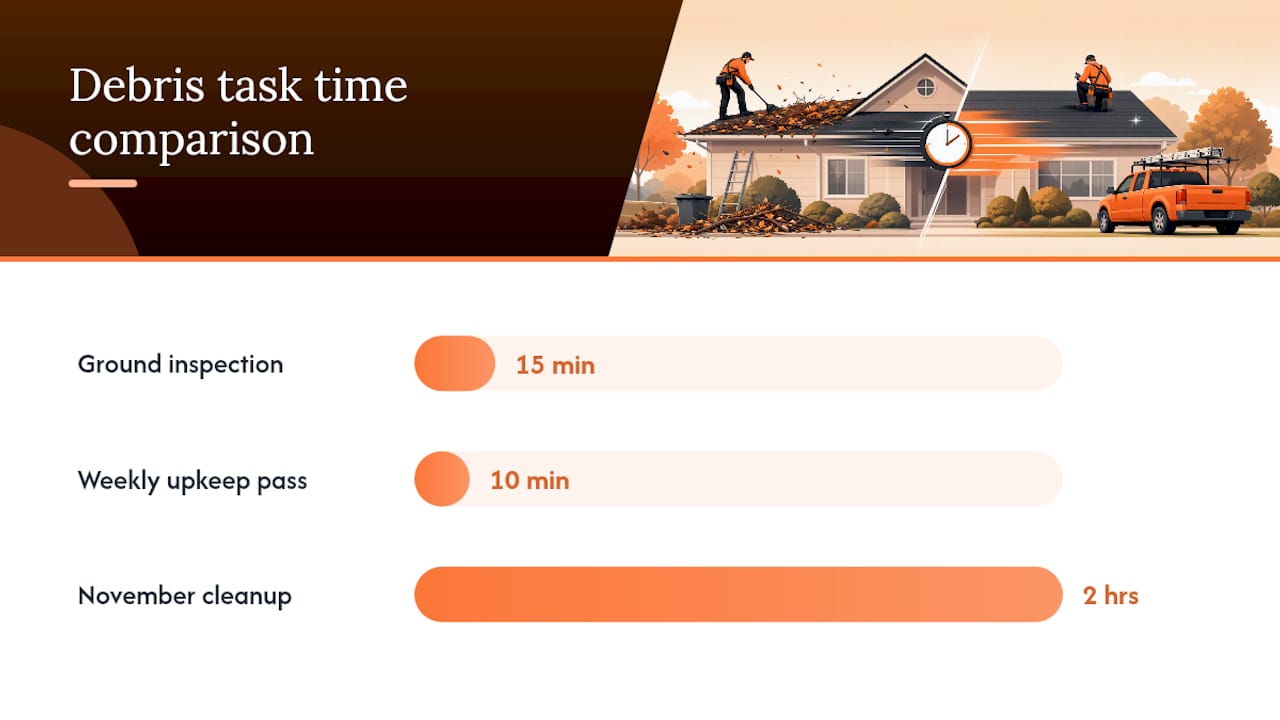
Start on the ground, not the roof. Walk the perimeter with a pair of binoculars and photograph anything that looks like a clog, a stain, or a loose shingle. That fifteen minutes of observation tells you whether this is a Saturday chore or a job for someone else.
Once you’ve confirmed the roof is dry, low-risk, and debris is light, work through this sequence:
Skip the pressure washer entirely. High-pressure water strips shingle granules and shortens roof life, a point our roofing team warns about when homeowners ask about “deep cleaning” their roof.
If you’re using a ladder, anchor it on level ground, keep three points of contact, and have someone spot you from below. Skip the metal ladder if there’s any line near the roof edge. Bag or tarp the debris as you go rather than dumping it into a pile that catches wind, and check with your local waste service, since many municipalities have separate yard-waste or green-waste pickup for this kind of material.
Pro Tip: Do the ground-level rake-and-blow pass every time you mow the lawn during peak leaf season. Ten minutes a week beats a two-hour cleanup in November.
Roof debris removal isn’t finished until the water has somewhere to go. Clogged gutters can cut drainage flow dramatically, and that backup pushes water toward siding, fascia boards, and foundations instead of away from the house, according to the same Washington roofing guide that documents moisture-related shingle damage.
Once the roof and gutters are clear, spend five minutes in the attic with a flashlight. Look for:
Any of those means water already got past the shingles before you cleared the debris. That’s not a cleanup problem anymore. It’s a repair one, and it’s worth a call to a roof inspection specialist before the next rain.
A contractor visit isn’t just someone with a bigger blower. It typically starts with a full roof inspection, followed by a documented photo report showing exactly what was found and removed, then a method that matches the debris, soft removal, hand clearing, or targeted gutter work, rather than one blunt approach for everything. Many contractors pair the visit with a quick check of flashing and sealant points, since those are common leak starters that debris tends to hide.
That kind of documentation matters more than it seems. A photo log tied to a maintenance visit gives homeowners real paperwork if an insurance claim or warranty question comes up later. The contractor backs its work with a workmanship warranty and offers same-day inspections, so the assessment step costs you nothing before you decide how far to take the cleanup.
DIY tool rental (a rake, an extension pole, maybe a used blower) runs cheap, often under $50 for a weekend, but it costs you your own time and the risk of a fall. A professional single visit for straightforward debris removal is a smaller line item than most homeowners expect. Combined cleanup plus minor repairs runs higher, and both depend heavily on roof size, pitch, and whether storm damage is involved.
Insurance rarely covers routine debris removal. Falling leaves and pine needles are considered maintenance, not damage. Storm-caused problems, a fallen tree limb, wind-torn shingles, are a different story and often qualify. Document everything with photos and contact your insurer promptly if the debris came from a named storm rather than routine seasonal buildup.
Late fall cleanup, before debris gets wet and matted, is easier and safer than a spring job on moss-slick shingles. For properties under heavy tree cover, a standing maintenance visit beats reacting after the fact every single time. Trim overhanging branches back from the roofline. It’s the cheapest prevention step there is.
— Rafael
A reputable roofing contractor’s advantage over calling around for one-off cleanup crews is straightforward: one call gets you a same-day inspection, a photo report, and a contractor who can move straight from debris removal into repair if something’s wrong underneath it. You’re not paying twice for two separate visits.
Book an inspection and you’ll get a documented walk-through of your roof, an honest estimate, and options, cleanup only, or cleanup paired with any repair the inspection turns up. Homeowners with heavy tree cover often enroll in the Roof Maintenance Program, starting at $395 per year, which schedules recurring debris clearing and gutter checks before problems build up. If your gutters are part of the backup, the gutter services team can flush them the same visit or install a leaf guard system to cut down on future clogs. Reach out through the roof inspection page to get on the schedule.
Use a telescoping roof rake or a leaf blower from the ground to clear leaves and needles, pulling debris downward rather than scraping. Skip pressure washing entirely, since it strips protective granules, and never climb onto a wet, steep, or mossy roof.
Costs depend on roof size, pitch, and how much debris or damage is involved, so pricing varies job to job. Top Florida Roofing’s standalone inspection runs $150 to $250 and gives you a documented starting point before any cleanup work begins.
Routine debris removal from seasonal leaves or needles is considered maintenance and typically isn’t covered. Storm-caused damage, like a fallen tree limb or wind damage, often qualifies, so document the cause with photos and contact your insurer promptly.
Check for damp insulation, staining on rafters, or visible daylight through the sheathing, all signs water or debris got in before or during the work. Any of those findings warrants a follow-up call to your roofing contractor for a closer inspection rather than a DIY fix.
Twice a year works for most homes, timed before heavy leaf drop and again before the wet season starts. Properties under heavy tree cover often need quarterly attention, which is where a standing maintenance program pays for itself.