Homeowners: Checklist to Demand Itemized Bids for Overlay vs Tear Off
For most homes, a full tear-off beats an overlay because it gives your contractor a clean look at the deck and keeps your manufacturer warranty intact. Overlay is only defensible when you have exactly one existing shingle layer, a dry and solid deck, and flat (not curling) shingles. If any of those conditions fail, tear-off is the only responsible option, and the checklist below tells you how to check.
TL;DR: Overlay roofs typically last 15 to 18 years, while tear-offs can last 20 to 30 years, affecting long-term cost-effectiveness despite lower upfront expenses. Homeowners should only consider overlay if the roof has a single layer, the deck is dry and solid, and shingles are flat and non-curling, as these conditions ensure safety and warranty compliance. Tear-off provides full inspection access to the deck, allows necessary repairs, and maintains eligibility for top-tier manufacturer warranties, justifying higher initial costs. The total lifetime waste from overlay doubles because of the eventual need for a tear-off, and extra shingle layers can weaken the roof structure over time. Accurate bid details, including itemized costs, permit responsibilities, and warranty conditions, are essential to avoid surprise charges and ensure proper project scope.
TL;DR:
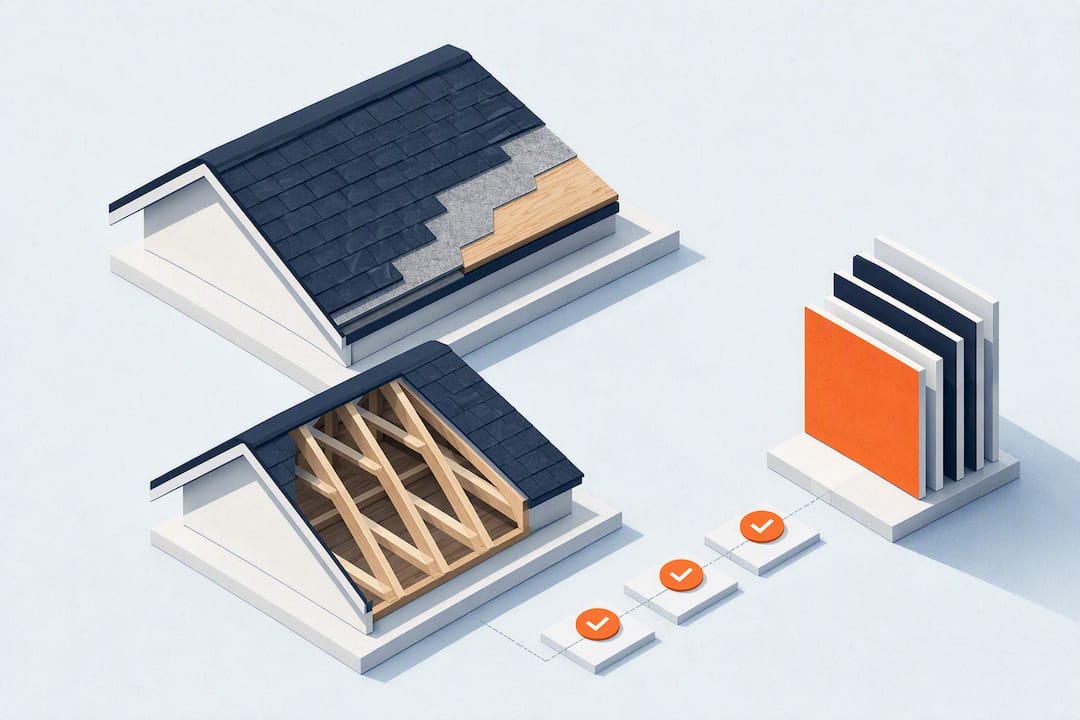
An overlay adds a new layer of asphalt shingles directly over one existing layer. No demolition, no dumpster, no deck exposure. A tear-off strips every layer down to the wood decking, then rebuilds from scratch. The difference in scope explains why the two jobs feel so different on-site.
That last point is the one most homeowners underestimate. You can’t fix what you can’t see, and an overlay guarantees you won’t see it.
Overlay usually runs 25% to 40% cheaper upfront than tear-off, according to cost data from TheRoofingBrief, but that gap shrinks fast once you look at lifespan instead of sticker price.
By the numbers: Overlay roofs typically last 15 to 18 years. Tear-off roofs, done correctly, last 20 to 30 years depending on material and installation quality. Tear-off also adds roughly $1 to $3 per square foot in labor and disposal costs for asphalt removal alone, based on regional pricing breakdowns.
Here’s what that looks like on a typical 2,000 square foot roof:
Do the math in cost-per-year instead of upfront price. A $9,000 overlay lasting 16 years runs about $563 a year. A $13,000 tear-off lasting 25 years runs about $520 a year. The “cheaper” option is often the more expensive one once you stretch it across its actual lifespan.
Every homeowner asks the same question eventually: is the money saved on overlay worth what you give up? Here’s the honest breakdown.
If you’re planning to sell within a year or two, the calculus shifts. If you’re staying put, tear-off usually wins on paper and in practice.
This is the part that actually protects you. Walk through it before you sign anything.
Pro Tip: Ask your contractor to check the attic with a flashlight during the inspection, not just walk the roof. Daylight, water stains, or a musty smell up there are the tells that overlay conversations should end immediately.
Overlay only makes sense when every single item above checks out. One failed condition, and you’re back to tear-off.
A vague bid is where surprise costs hide. Insist on itemized numbers before you sign anything.
A solid contractor vetting checklist covers more than pricing, but pricing transparency is where most bad bids reveal themselves first.
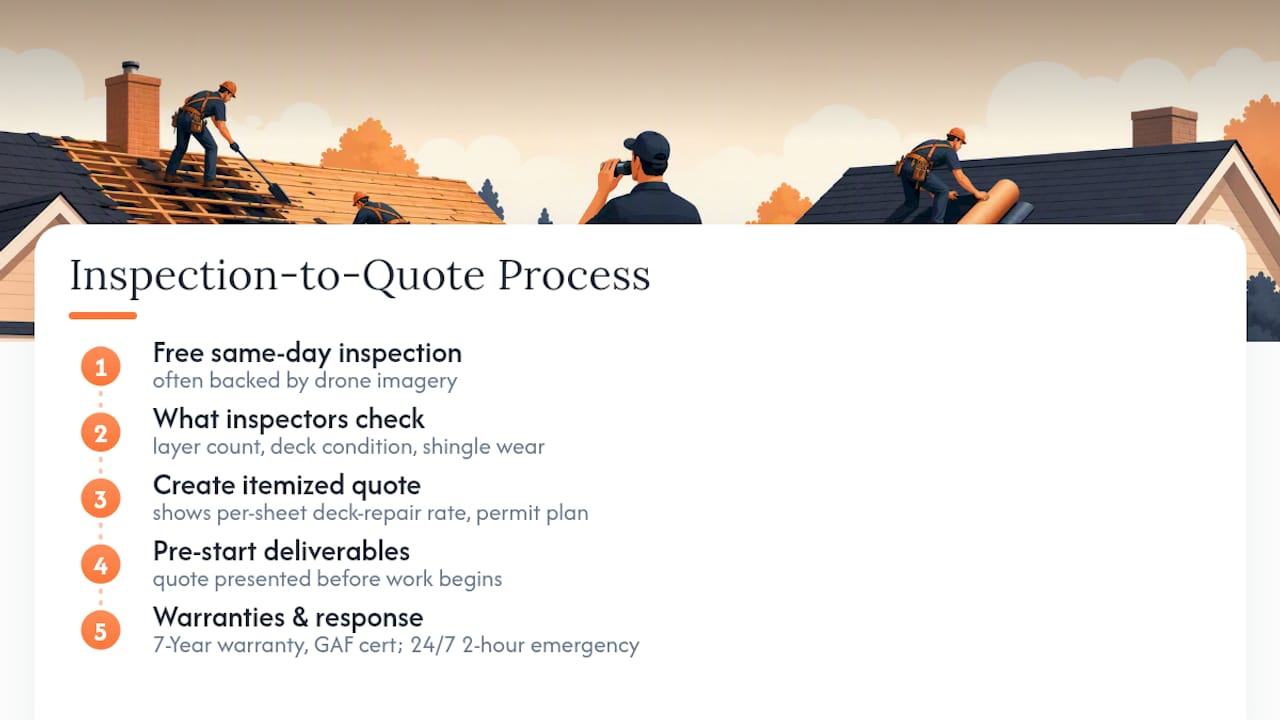
Since 2010, Top Florida Roofing has completed more than 3,200 roofing projects across Miami-Dade with a 98% satisfaction rate. Every job starts the same way: a free same-day inspection, often backed by drone imagery, to check layer count, deck condition, and shingle wear before any recommendation is made.
That inspection feeds directly into an itemized quote, so you see the per-sheet deck-repair rate and permit plan before work starts, not after. Every reroof carries a 7-Year Elite Craftsmanship Warranty, and the crews hold GAF certification, which matters if you’re chasing a manufacturer’s top warranty tier. Emergency calls get a response within 2 hours, 24/7, when storm damage forces a faster decision than a routine reroof timeline allows.
Overlay traps a layer of dead air between the old and new shingles, which can act as minor extra insulation against radiant heat in summer. That’s a real but modest effect, not a design feature anyone should count on.
Tear-off gives you the chance to fix what overlay can’t touch: the insulation and ventilation underneath. Once the deck is exposed, a contractor can add or upgrade attic insulation, install proper ridge and soffit ventilation, and correct any moisture pathways that have been quietly degrading your attic’s R-value for years. In Florida’s climate, ventilation matters as much as insulation, since trapped heat and humidity in an attic drive up cooling costs regardless of what’s happening on the roof surface.
Overlay also means you’re stuck with whatever underlayment and decking performance you already have. If the original roof was installed with minimal moisture barrier or outdated ventilation baffles, an overlay locks that inefficiency in for another 15-plus years. Tear-off is the only method that lets you correct it.
For homeowners chasing lower energy bills, that’s often the deciding factor over layer count or even cost. A cheaper reroof that leaves your attic under ventilated isn’t actually the cheaper choice once you add up a decade of extra air conditioning runtime.
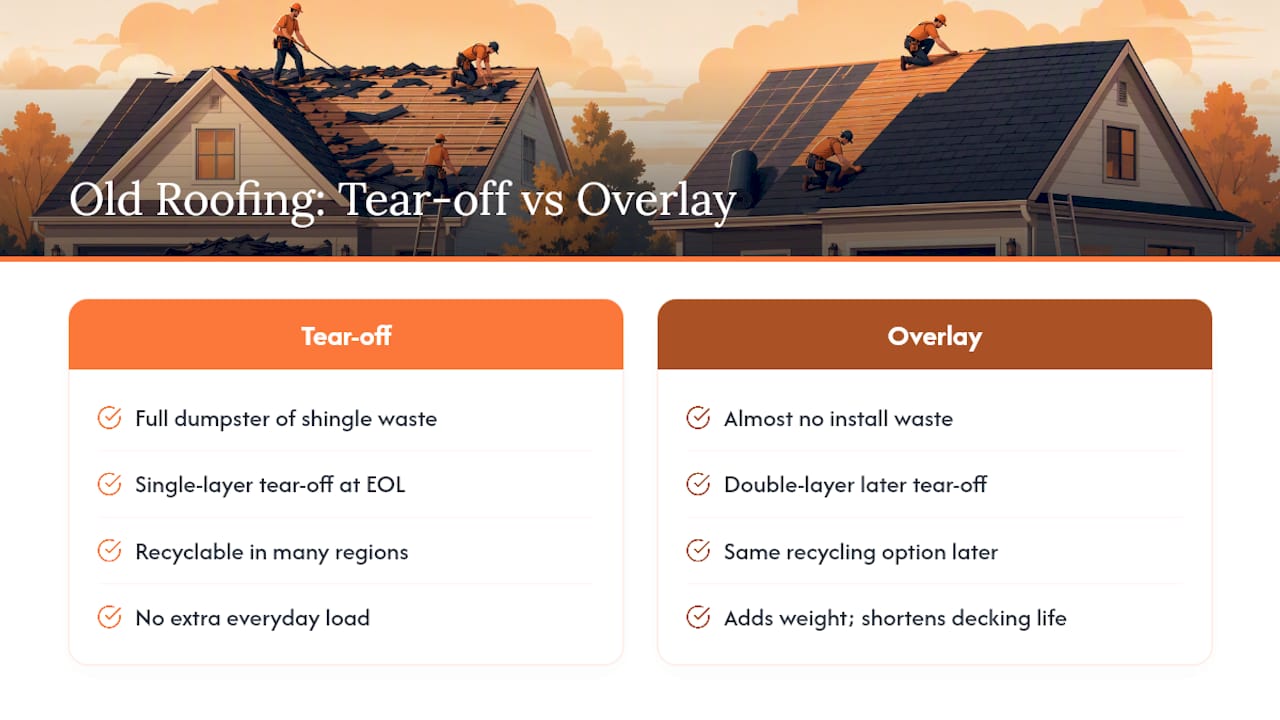
Tear-off generates a full dumpster of torn-off shingles, felt paper, and sometimes damaged decking. That waste has to go somewhere, and increasingly, it doesn’t have to go to a landfill. Asphalt shingles can be recycled into road paving material in many regions, and a growing number of roofing disposal haulers now separate shingle waste for recycling rather than dumping it whole.
Overlay produces almost no waste during installation, since the old layer stays in place. That sounds like the environmentally friendly choice on the surface, but it just delays the waste problem. Every overlay roof eventually needs a tear-off when it reaches end of life, and at that point, a crew is removing two full layers of shingles instead of one. The total lifetime waste volume doesn’t shrink. It just gets deferred and doubled.
There’s also a structural angle with an environmental cost. Extra shingle layers add weight the roof structure carries every day, which shortens the service life of the decking and framing underneath, in some cases forcing earlier full replacement, and more total material through the waste stream over the life of the house.
If recycling matters to you, ask your contractor directly whether they route torn-off material to a shingle recycling facility instead of a standard landfill hauler. Not every hauler does, and it’s a fair question to put in writing on your quote.
Overlay is only ever an option on asphalt shingle roofs going over asphalt shingles. That’s a firm limit, not a preference. Tile, metal, slate, and flat membrane roofing systems don’t get overlaid the way asphalt does, and attempting it creates structural and warranty problems fast.
Tile roofs, common across South Florida, require full removal and inspection of the underlayment beneath the tiles, since that membrane degrades long before the tiles themselves show wear. Metal roofing systems, including standing seam installations, have their own replacement logic entirely separate from asphalt layering rules. Flat roofs using TPO, EPDM, or modified bitumen get patched or fully replaced, not overlaid in the asphalt sense.
That means the entire overlay-versus-tear-off conversation really only applies to asphalt shingle roofs with one existing asphalt layer. If your home has tile, metal, or a flat commercial membrane system, the decision tree looks completely different, and the code layer-count rules that govern asphalt don’t apply the same way.
This is worth confirming early, because some contractors will quote an “overlay” on a roof type where the term doesn’t really mean what it means on asphalt. Ask specifically what method applies to your exact roofing material before comparing any prices.
The quote is only half the picture. The conversation before the quote tells you more about whether a contractor will do the job right.
Ask how many overlay jobs versus tear-off jobs they’ve completed in the past year, and ask them to explain why they’d recommend one over the other for your specific roof, not roofs in general. A contractor who gives the same answer regardless of your deck condition or layer count isn’t actually evaluating your house.
Ask what happens if they find rot once the tear-off starts. A vague answer here is a red flag. You want a stated per-sheet repair rate in writing before demolition begins, not a phone call mid-project asking for thousands more.
Ask whether the manufacturer warranty they’re quoting requires tear-off, and ask them to show you the actual warranty document, not just describe it verbally. Ask how they handle permit pulls and inspections, and whether that’s included in the quoted price or billed separately.
Finally, ask for references specific to the method you’re choosing. A contractor with strong tear-off references but thin overlay experience, or vice versa, is telling you something important about where their skill actually lies.
Tear-off wins most arguments because it removes the guesswork. You see the deck, you fix what’s actually wrong, and you keep full access to premium warranty tiers. Overlay makes sense in narrow cases: one clean layer, a verified dry deck, flat shingles, and a short ownership horizon. Outside those conditions, overlay is a bet against your own attic. Get a free inspection before you bet.
— Rafael
Topfloridaroofing gives Miami homeowners something most overlay-versus-tear-off decisions lack: a free same-day inspection that actually settles the question instead of guessing at it. Drone imagery and a hands-on deck check tell you whether you have one layer or two, and whether your decking is dry enough for overlay to even be legal under model code limits.
Every quote is itemized, with tear-off, disposal, and a per-sheet deck-repair rate spelled out before any work starts, so there’s no mid-project change order shock. Permits are pulled and tracked as part of the process. Completed reroofs carry a workmanship warranty, and crews respond quickly to emergency calls when storm damage forces faster decisions.
If your roof is showing curling shingles, a second layer already in place, or any hint of a soft deck, request a free inspection for your residential roof and get a straight answer, in writing, before you sign anything.
The layer-count and code guidance in this article draws on model code standards summarized by the National Roofing Authority, which explains IRC and IBC limits on asphalt shingle layering. Cost ranges and lifespan figures come from TheRoofingBrief’s overlay comparison and Best LA Roofing’s cost and timeline breakdown, both of which draw on real project pricing data across residential markets. Contractors researching how to present bid transparency to clients may also find value in The Savage Influence’s guide to contractor marketing.
Overlay is worth it only in narrow cases: one existing asphalt layer, a verified dry and solid deck, and flat, non-curling shingles. Outside those conditions, the upfront savings usually cost you more in shortened lifespan and reduced warranty eligibility than tear-off would have.
Overlay roofs typically last 15 to 18 years, compared to 20 to 30 years for a properly executed tear-off. The gap comes from trapped moisture and hidden deck issues that overlay can’t address.
Overlay generally runs 25% to 40% less upfront than a full tear-off, since it skips disposal fees and deck repair. Exact pricing depends on roof size and materials, and Top Florida Roofing provides itemized, no-cost quotes after a free same-day inspection.
Avoid guessing at causes, dates, or prior damage you’re not certain about, and never speculate that damage is “old” or “pre-existing” if you don’t actually know that. Stick to what you observed and let a documented, itemized contractor inspection speak for the roof’s actual condition.