When to Repair, Replace, or Claim Shingle Granule Loss for Homeowners
Some granule loss is normal. Every asphalt shingle sheds loose granules for years after installation, and gradual thinning from decades of UV exposure is just aging. Sudden, heavy, or patchy loss, especially where bare asphalt shows through or you see ceiling stains, is different. Photograph the gutters and roof, check the attic for water marks, note any recent storms, and call a professional if the loss looks concentrated or sudden. GAF, the Asphalt Roofing Manufacturers Association, and IBHS all treat granule inspection as a standard part of roof maintenance, not a red flag by itself.
TL;DR: Most granule loss is normal, occurring during initial shedding or gradual aging, but sudden or concentrated loss indicates possible damage or advanced deterioration. The pattern of granule loss, such as even aging, localized impact, or linear wear, reveals different causes like UV exposure, hail impacts, or foot traffic. Inspecting gutters, shingles, and attic regularly helps identify early signs of excessive loss, especially before leaks develop or damage becomes costly. Targeted shingle replacement is suitable for isolated, recent damage, while widespread loss or visible bare asphalt suggests full roof replacement is likely necessary. Temporary fixes like adding loose granules or patching do not restore protective qualities, so professional assessment is key before making repair decisions.
TL;DR:
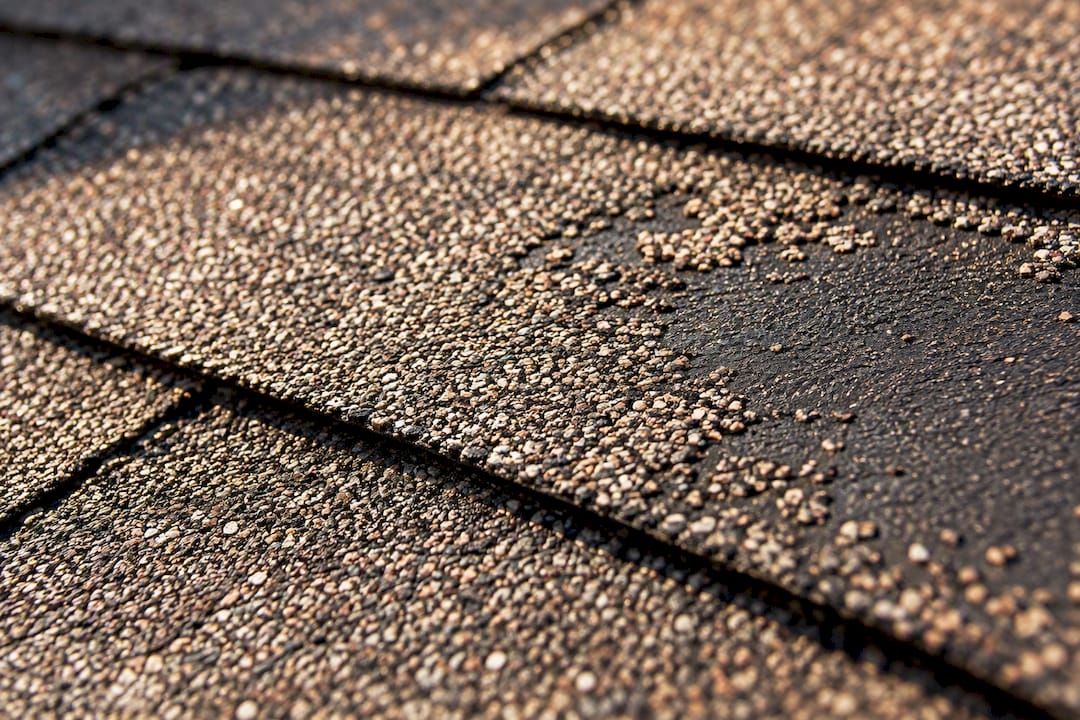
Those small mineral chips embedded in the asphalt aren’t decorative. They block ultraviolet rays that would otherwise cook the asphalt mat, they add fire resistance, they help shed water off the surface, and they give the shingle its color. Strip enough of them away and the asphalt underneath starts absorbing UV directly.
That’s when things speed up in a bad way. Unprotected asphalt oxidizes faster, turns brittle, and cracks sooner than it should. A shingle that might have lasted 20 years can start failing in half that time once granule coverage drops below a functional threshold.
That’s why granule loss is a structural issue, not just a cosmetic one, according to manufacturer guidance from GAF. The granules do three jobs at once:
Lose enough of them, and you’re not looking at a roof that looks a little worn. You’re looking at a roof that’s aging on fast forward.
The distribution of missing granules tells you almost everything about the cause, and that pattern matters more than the total amount you find in the gutter.
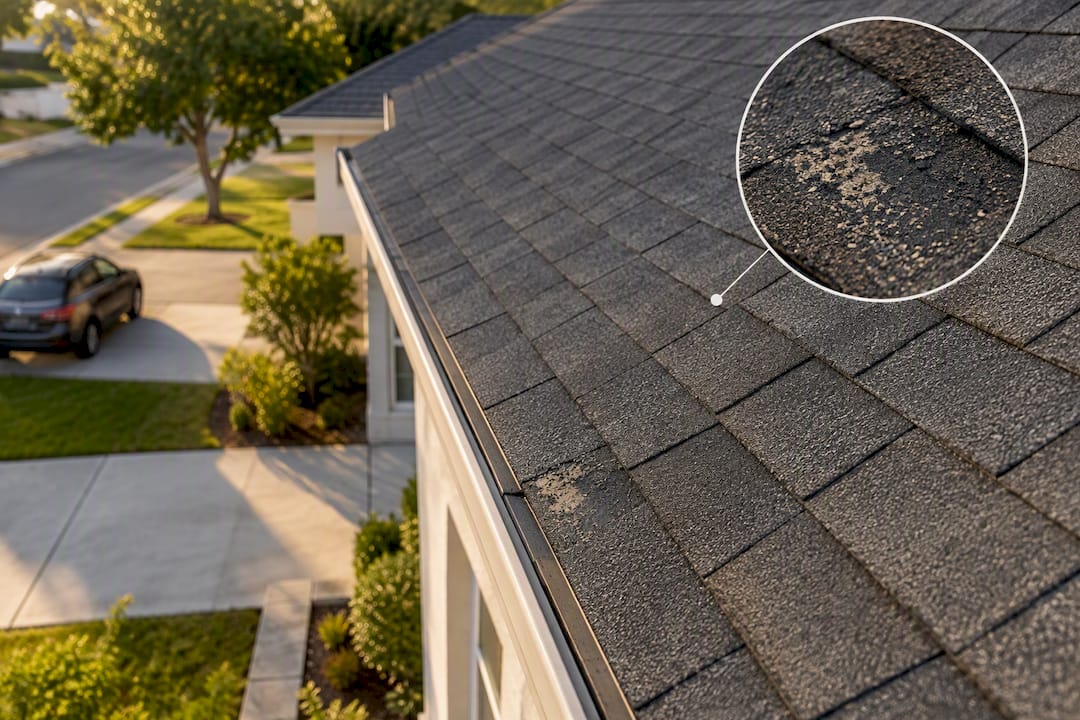
Start at ground level. Check your gutters and downspouts for granule buildup, look for shiny or discolored patches on the shingles from a distance, and scan for any spots where the underlying mat looks visibly darker than the surrounding roof.
Skip the ladder if the roof is steep, wet, or you’re not confident on it. A professional inspection covers what you can’t safely see, including close-up photos of bare patches, measurements of affected area, and a check of the attic decking for moisture staining that hasn’t reached the ceiling yet.
Whatever you find, log it properly:
RICOWI and IBHS guidance on roof damage documentation recommends both wide-angle and close-up shots for any insurance claim, since adjusters look at concentration and suddenness, not just the presence of bare spots.
Pro Tip: Set a phone reminder for the first week of spring and the first week of fall. ARMA and IBHS both point to twice-a-year checks as the cadence that catches problems before they become leaks.
Age and extent decide this one, not gut feeling. A roof that’s five years old with one bald patch after a storm is a different situation than a 17-year-old roof with granule loss spread across every slope.
Individual shingle replacement works when the damage is contained. A qualified roofer pulls the affected shingles, checks the underlayment for hidden moisture, and installs matching replacements without disturbing the surrounding seal.
Partial re-roofing gets more complicated. Matching shingle color and profile across an older roof is hit or miss, since sun exposure fades existing shingles unevenly, and flashing work around chimneys or vents often needs redoing if the surrounding shingles are pulled up. Some manufacturer warranties also get voided by mixed-batch repairs, so ask before signing off on a patch job.
Skip anything marketed as a quick granule fix applied with a brush or spray. It’s a temporary cosmetic layer, not a repair, and it wears off within a season or two.
Pro Tip: If a contractor offers to “just sprinkle some granules on it” without pulling the shingle, walk away. That’s a stopgap, not a fix, and it can mask damage that gets worse underneath.
Prevention here is mostly about reducing unnecessary wear, not stopping aging entirely. No shingle lasts forever, but a few habits stretch the timeline meaningfully.
Most homeowners overcorrect in one direction or the other. Either they see a cup of granules in the gutter and assume the roof is failing, or they see nothing dramatic from the ground and assume everything is fine. Both instincts miss the point. Granule loss is about pattern and location, not volume, and a roof can look fine from the driveway while hail has already displaced granules in a spot that only shows up on close inspection.
The bigger blind spot is timing. Homeowners tend to inspect after they notice a leak, which is backward. By the time water is coming through the ceiling, the granule loss that caused it happened months or years earlier. ARMA’s guidance on inspection cadence exists because catching thinning before it becomes bare asphalt is the difference between a $300 shingle repair and a full replacement.
Our inspection process follows that same logic: document early, document precisely, and don’t wait for the ceiling stain to show up before calling someone. Experienced roofing teams have handled thousands of roofing projects across South Florida, with costly problems often linked to granule loss going unnoticed for a full storm season or two.
— Rafael
A professional roofing contractor gives homeowners more than a generic gutter check: a free same-day inspection backed by a documented, photo-based report, not just a verbal opinion. That matters when you’re trying to decide whether granule loss is normal wear or something an insurance adjuster needs to see.
A professional visit covers what a ground-level check can’t, including close-up shots of bare patches, a measured assessment of affected area, and an attic check for moisture that hasn’t reached your ceiling yet. If the damage turns out to be storm-related, our crews handle everything from targeted shingle repair to emergency tarping and full storm-damage restoration, and we back workmanship with a 7-Year Elite Craftsmanship Warranty as GAF Master Elite certified contractors. For anything urgent, our 24/7 emergency service typically gets a crew on-site within two hours.
If you’ve spotted granules piling up in your gutters or bare patches on your roof, schedule a free inspection and get a clear answer before a small problem turns into a leak.
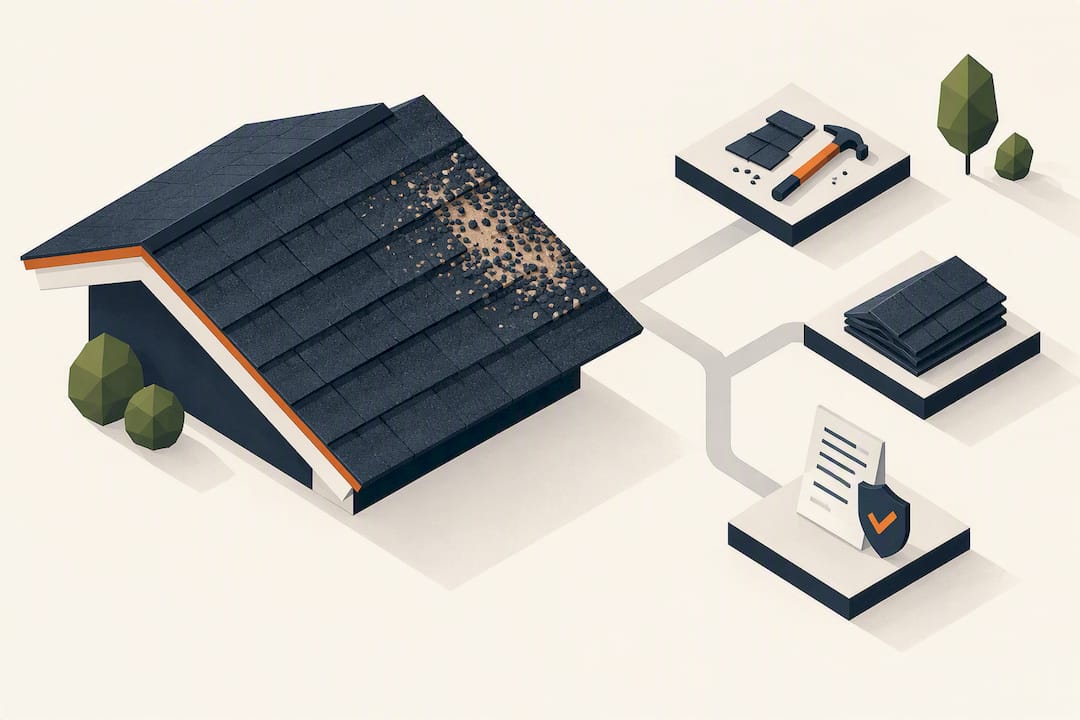
Isolated granule loss on a younger roof is usually fixed with targeted shingle replacement, done by pulling the affected shingles and installing matching ones. Widespread loss or bare asphalt across multiple slopes usually points to full replacement rather than patching, since cosmetic granule fixes don’t restore the shingle’s protective barrier.
Yes, some granule loss is completely normal. New roofs shed loose “hitchhiker” granules during the first rains after installation, and older roofs thin gradually from UV exposure over their lifespan. It only becomes a concern when the loss is sudden, heavy, or concentrated in one area.
There’s no single cup or weight measurement that determines urgency. What matters is the pattern: bare asphalt showing through, granule loss concentrated after a specific storm, or thinning combined with a roof approaching the end of its expected lifespan all signal it’s time for a professional look.
Not necessarily. Isolated or storm-linked granule loss on a roof that’s otherwise in good condition is often repairable without a full replacement. Full replacement becomes the better option when loss is widespread, the asphalt mat is visibly exposed, or the roof is already near the end of its rated lifespan.