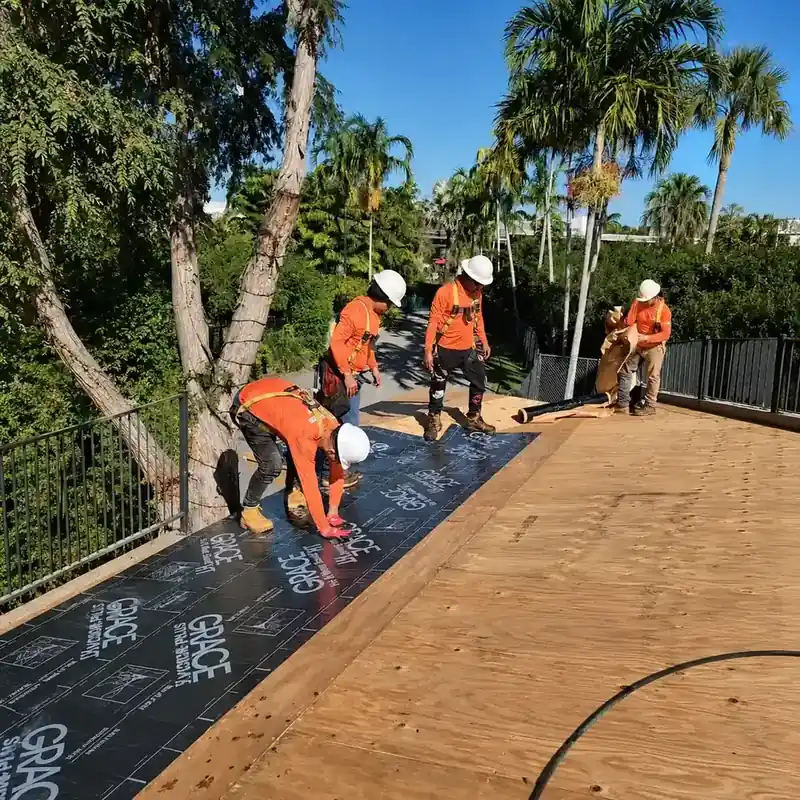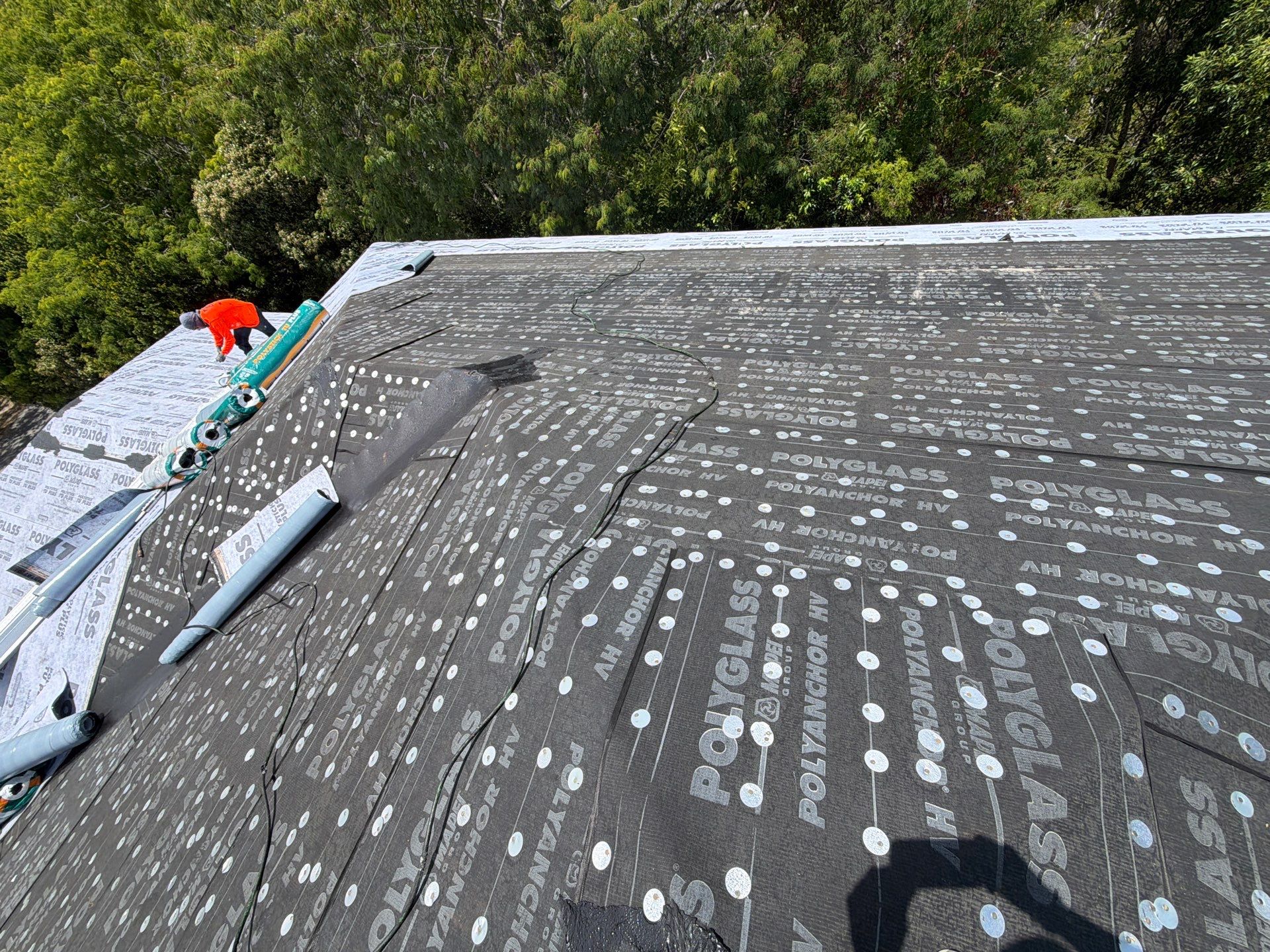
Planning solar and roof replacement together starts with the condition of the roof and the responsibilities of each contractor. A sound roof may support a new solar installation, while a roof nearing replacement may justify completing roofing work first. There is no single remaining-life cutoff that makes the decision for every property.
If panels are already installed, roof work may require professional removal and reinstallation. Obtain both the roofing scope and the solar handling scope before scheduling demolition.
Deciding whether the roof should come first
Ask a roofing professional to assess existing leaks, covering condition, flashing, visible structural concerns and likely repair or replacement needs. Drone or surface photos can help document conditions, but cannot prove that concealed decking is sound.
The Department of Energy notes that most rooftop solar systems maintain at least 80% of their initial output for at least 25 years. That makes future roof access worth considering before a new array is installed, but it is not a guarantee about any specific roof or panel system.
Compare the expected roof work, future removal costs and available budget. Replacing a serviceable roof prematurely is not automatically economical, while installing an array over known unresolved roof problems can create avoidable complications. Ask for the reasons behind the recommendation rather than accepting a blanket ten-year rule.
Replacing a roof with existing panels
Start with the original solar provider and any system owner, lessor or finance company. Confirm who is authorized to handle the equipment and what the contracts require. Solar panels, electrical connections and racking are not homeowner removal tasks.
A coordinated process generally includes assessing the system, arranging qualified disconnection and removal, protecting or storing equipment, completing roofing work, reinstalling compatible mounting details and testing the system. Required inspections or utility steps depend on the work and local rules.
The Department of Energy confirms that roof replacement requires removal of panels and mounting equipment to complete the work. That does not mean an older but functioning array must automatically be replaced with new panels. Ask the solar professional which components remain suitable and which require attention.
Building an itemized budget
A generic per-panel price is not a reliable total project allowance. System size, roof access, mounting details, equipment condition, storage and provider requirements can change the scope.
Ask the solar provider's written quote to identify:
- Electrical disconnection, labeling and removal of panels and racking.
- Transport or storage and responsibility for damage while equipment is off the roof.
- Reuse or replacement of mounting hardware and any affected components.
- Reinstallation, testing and documentation of restored operation.
- Permit, inspection or utility-related charges if required.
- Weather delays, return visits, exclusions and change-order terms.
Obtain a separate roofing scope covering deck repairs, flashing, penetrations, materials and permits. Ask whether the equipment layout affects roofing access or the chosen assembly. Account for system downtime without assuming it will last a fixed number of days.
Permits, schedules and responsibility
Confirm local building requirements before setting dates. Roofing and electrical or solar work may require different permits and qualified trades. If the array's layout or electrical configuration changes, additional requirements may apply.
Put the handoff sequence in writing: who removes the system, when the roofer may start, who confirms the roof is ready for mounting, and who performs final testing. Allow for Florida weather without leaving responsibility for temporary protection unclear.
If storm damage affects both systems, tell your insurer and both contractors. Keep photos and invoices, but do not assume insurance automatically covers every removal, upgrade or reinstall expense. Coverage depends on the policy, damage and approved claim scope.
Current federal tax-credit guidance
As reviewed on October 8, 2026, the IRS states that the Residential Clean Energy Credit is not available for property placed in service after December 31, 2025. An older solar article describing a continuing 30% credit should not be used to price a new 2026 residential installation.
For eligible installations within the earlier period, IRS guidance distinguishes qualifying solar property from ordinary structural roofing. Conventional shingles and general roof replacement were not made eligible simply by installing panels above them. Certain solar roofing shingles or tiles could qualify because they generated electricity, subject to the applicable eligibility rules.
An unused credit from an eligible earlier installation may have separate carryforward treatment. State, local, utility or business incentives are distinct programs; this article does not establish their availability. Confirm current eligibility with the relevant program and a qualified tax professional before signing a financing agreement.
Warranty and contract checks
Ask both providers how penetrations, mounting details and later roof access affect their warranties. Identify who is responsible for a leak at a mounting point, damage during storage or a system that does not resume operation. Product and workmanship warranties may cover different issues.
For a bundled “free roof with solar” offer, compare the full cash price, financed total, financing terms and separate line items. Do not assume the roofing cost is absent simply because it is not shown as a separate upfront charge.
Top Florida Roofing can discuss the roofing portion through a roof inspection and a written roof replacement proposal. Confirm the solar contractor's qualifications and equipment-handling scope separately, and obtain approval for the planned mounting details before work begins.
Frequently asked questions
Should I replace my roof before adding solar?
Base the decision on an inspection, likely roofing needs and the costs of future array removal. Known roof problems should be addressed, but there is no universal remaining-life threshold requiring replacement.
Can the roofer remove and reconnect the panels?
Do not assume a roofing scope includes electrical or solar work. Confirm the appropriately qualified and authorized provider, especially when the system is leased or covered by another provider's warranty.
How much does removal and reinstallation cost?
Request an itemized quote for the actual system. Access, hardware, storage, electrical work and provider requirements matter; a fixed per-panel figure may omit important charges.
Is the federal residential solar tax credit available for a new 2026 installation?
Current IRS guidance says the Residential Clean Energy Credit is unavailable for property placed in service after December 31, 2025. Verify the applicable rules and any separate incentives with a qualified tax professional.
Does replacing the roof mean replacing the solar panels?
Not automatically. The solar professional should assess the array's condition, compatibility and economics before recommending reuse or replacement.
- U.S. Department of Energy: Should I Replace my Rooftop Solar System? — system life and reroofing considerations. Its older tax discussion is not the basis for current eligibility.
- IRS: Residential Clean Energy Credit — current cutoff and qualifying-property guidance checked October 8, 2026.