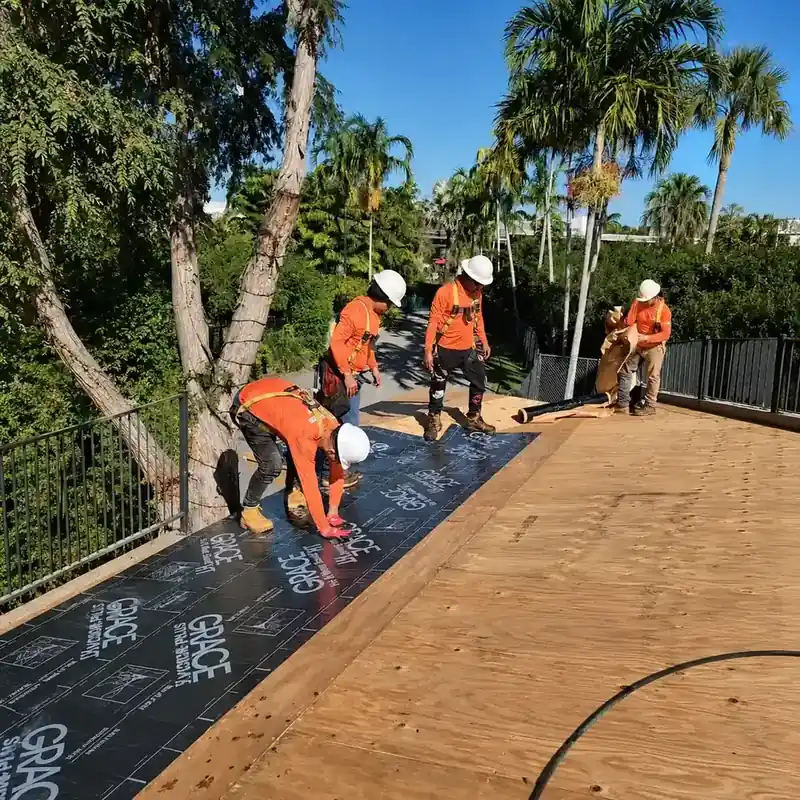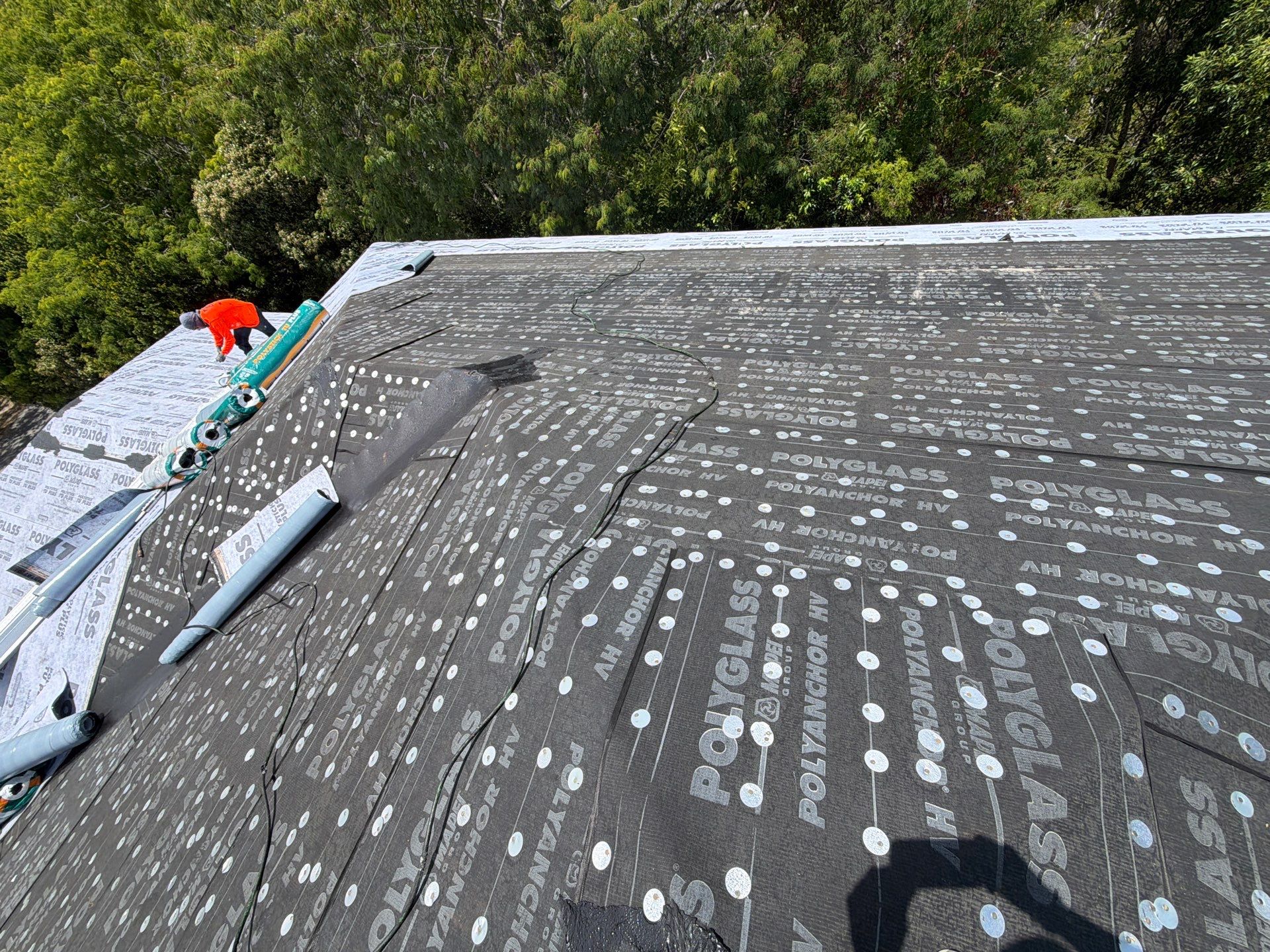
Tile roof underlayment replacement addresses the water-resistant layer beneath the tiles. The visible tile and the materials below it do not necessarily deteriorate at the same rate, so a roof that looks acceptable from the street may still need attention beneath the covering.
However, a leak does not automatically mean every square foot of underlayment must be replaced. The cause may be a localized flashing defect, damaged tile, a penetration or more widespread deterioration. A professional assessment should establish the problem and the proposed scope.
What underlayment does
The tile covering sheds much of the rain, while the underlying assembly provides additional water management. Underlayment, flashing, valleys, penetrations and drainage details need to function together. A suitable membrane cannot compensate for incorrectly installed flashing or damaged decking.
Roofing underlayment should not be confused with uncoupling mats used beneath ceramic or stone flooring. Similar product descriptions do not establish the same intended use, weather exposure, fastening performance or approval for a roof.
Roofing products and approvals
A proposed tile roof may use an appropriate asphalt-based, synthetic, self-adhered or multilayer underlayment system. Suitability depends on the specific approved assembly—not simply whether a roll is labeled synthetic or peel-and-stick. Avoid blanket claims that every product in one category lasts longer than every product in another.
Ask for the product name, applicable approval documentation and current installation instructions. Relevant details can include substrate condition, permitted slope, tile attachment method, fastening, laps, exposure limits and compatibility with the other materials.
The Florida Building Code product approval search is a starting point for checking product documentation. The roofer must determine the appropriate code edition and approval route, including restrictions for a High-Velocity Hurricane Zone project where applicable. A product approval number alone is not proof that every installation method is permitted.
When to investigate
Arrange an assessment for recurring leaks, new ceiling stains, displaced tiles, visible damage after wind events or professionally observed deterioration beneath the tile. Moisture can also enter through flashing or penetrations, so the diagnosis should not stop at the first suspected membrane defect.
Do not wait 15–25 years between inspections. There is no single replacement age that applies to every tile roof. Review condition regularly and follow manufacturer and professional maintenance recommendations, with additional checks after severe weather or new symptoms. Homeowners should not lift or walk tiles to determine whether the membrane is brittle.
Lift-and-relay versus replacement
Lift-and-relay means removing reusable tiles, replacing the affected underlayment as specified and resetting suitable tiles. When the old underlayment is removed, the exposed deck can also be inspected and repaired. Reusing tile does not justify leaving damaged decking hidden or ignoring flashing.
Replacement with new tile removes the old assembly and installs new materials. It may be appropriate when existing tiles are damaged, difficult to match, unsuitable for reuse or inconsistent with the planned approved system. Both approaches can require decking repair and new flashing.
Localized repair may be reasonable for a limited defect when surrounding materials remain serviceable. It does not renew the entire underlayment or guarantee the performance of untouched areas.
Do not assume lift-and-relay is always cheaper or that new tile always means a better repair. Tile handling, breakage, approvals, labor and the full scope determine the outcome.
Nine items to require in a quote
- Roof area and limits: identify the sections included and how the area was measured.
- Removal and tile handling: specify reuse versus replacement, storage, matching and breakage allowances.
- Underlayment: name the roofing product and assembly, with approval and installation documentation.
- Deck inspection and repairs: explain when the deck will be assessed and how additional work is priced and authorized.
- Flashing and penetrations: itemize valleys, walls, vents and skylights; state what is replaced or retained and why.
- Temporary protection: explain the dry-in plan and response to weather interruptions.
- Permits and inspections: identify responsibilities, fees and required inspection stages for the actual jurisdiction.
- Cleanup and disposal: include hauling, property protection and removal of debris.
- Warranty and completion records: separate product coverage from workmanship terms and describe exclusions, photos and final documents.
These details make bids comparable. A lower total is not necessarily better if it omits decking allowances, tile breakage or flashing replacement. Request change-order terms before work begins rather than relying on a verbal promise that hidden damage is included.
Weather protection and maintenance
Underlayment replacement exposes parts of the roof during construction. Ask how the crew limits open areas, protects the building if rain interrupts work and manages removed tiles safely. Do not enter the work area or attempt to handle temporary roof protection yourself.
After completion, retain the product documentation, permit records, warranty and photos. Arrange appropriate inspection and debris removal, and have displaced tiles or drainage issues assessed promptly. Later solar, antenna or equipment work should use compatible roof details and avoid damaging the new assembly.
Top Florida Roofing can assess the roofing concern and discuss tile roof repair or roof replacement. Request a written recommendation identifying what can be reused and what needs replacement.
Frequently asked questions
Can roof underlayment be replaced without removing tiles?
The contractor generally needs to remove tiles over the area being replaced to access the underlayment and deck. Sound tiles may be reusable, but the inspection and handling plan should be written into the scope.
Is peel-and-stick always the best underlayment?
No single category suits every roof. The specific product, approved application, substrate, attachment method and installation instructions determine whether it is appropriate.
Does lift-and-relay prevent a full deck inspection?
No. Removing tiles and old underlayment exposes the decking in the area opened. Require the contractor to inspect and address that deck, regardless of whether the tiles will be reused.
How much does tile roof underlayment replacement cost?
It depends on area, pitch, access, tile reuse, flashing, permits and hidden damage. Obtain an itemized assessment rather than using a generic tile-repair average as a complete replacement budget.
How often should I inspect a tile roof?
Use a regular maintenance schedule appropriate to its condition and manufacturer guidance, plus checks after severe weather or a new leak. Do not treat a possible material lifespan as an inspection interval.
- Florida Building Code Online: Product Approval Search — check the actual product, approval limitations and attached installation documentation.
No individual underlayment brand or installation standard is recommended without verification for the proposed roof assembly.