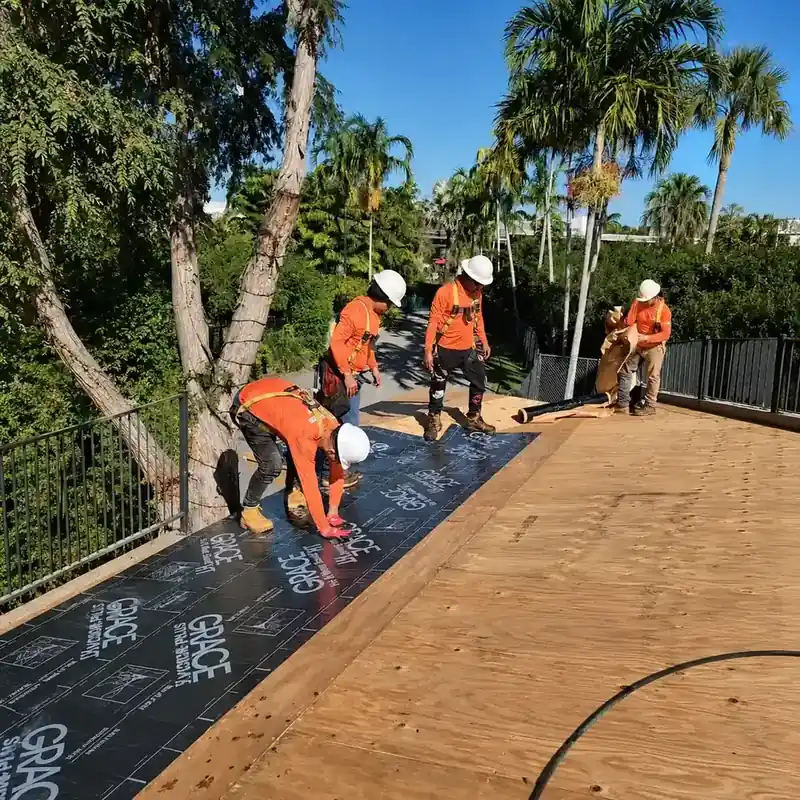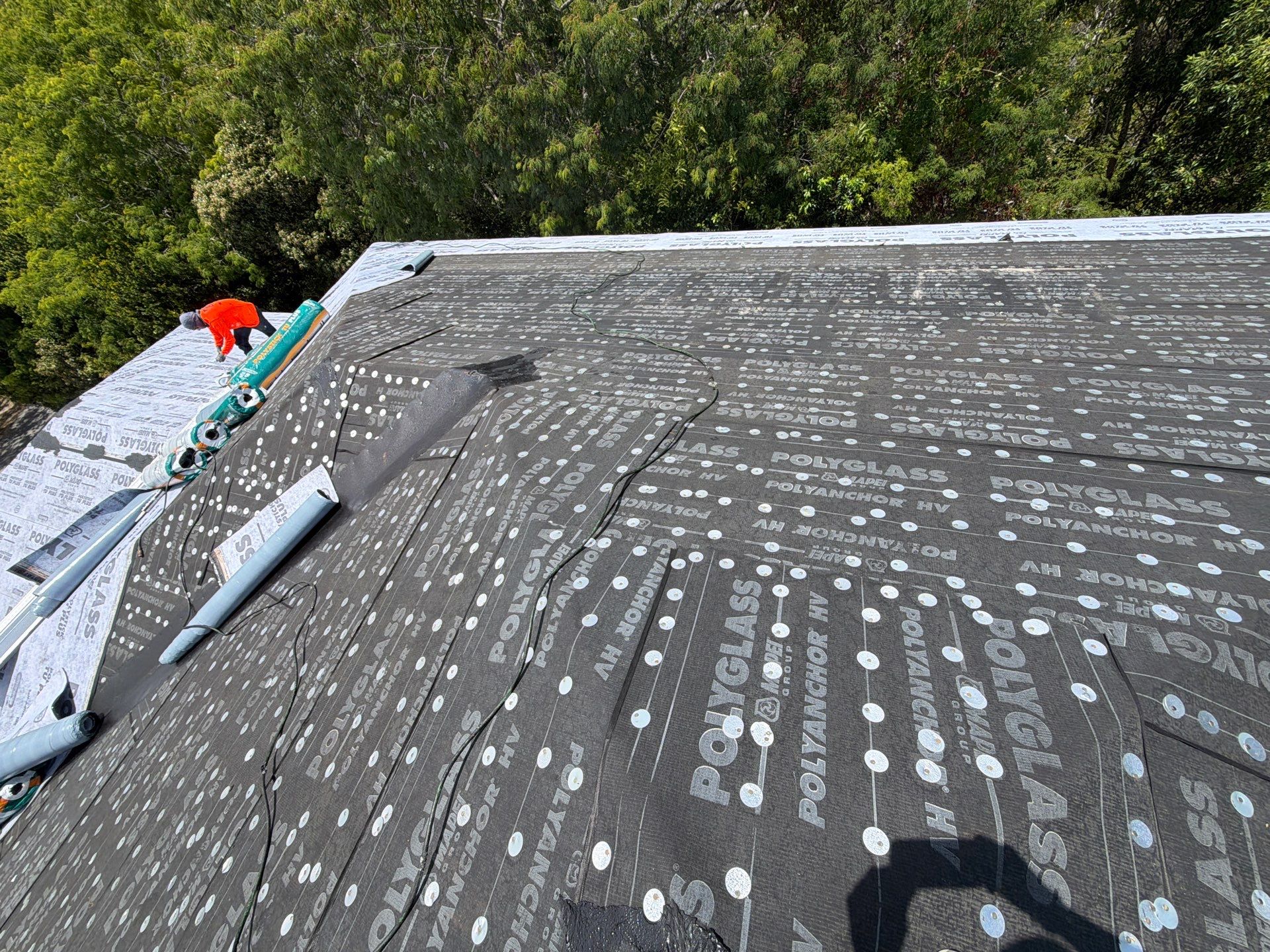
A useful roof inspection checklist covers the roof covering, flashing, drainage, interior signs of moisture and the limits of safe access. For homeowners, it is a way to record visible concerns and prepare for a professional visit—not instructions to walk the roof or certify its condition.
Florida's heavy rain and wind make changes worth documenting promptly. You do not need to identify the exact failure mechanism before calling a roofer. A new stain, displaced tile or recurring drip is enough reason to request an assessment.
1. Exterior covering
From a safe ground-level position, scan the roof with binoculars if needed. Record what you can actually see and leave inaccessible areas marked as not observed.
- Shingles: missing pieces, lifted edges, irregular patches or obvious deterioration.
- Tile: cracked, displaced or missing tiles, especially near ridges and valleys.
- Metal: visibly displaced panels, damaged trim or noticeable corrosion.
- Low-slope roofing: ask the professional to check membrane seams, drainage and penetrations; these are often not visible from the ground.
A photograph cannot establish the condition of materials beneath the covering. Dark streaks alone are not proof of an active leak, and an apparently intact surface does not rule one out. Compare findings with prior photos rather than guessing the age of damage.
2. Flashing and penetrations
Flashing directs water around interruptions in the roof, including vents, skylights, chimneys and wall intersections. Note visibly loose trim or gaps, and tell the inspector where indoor stains are located relative to these features.
Ask the professional to inspect flashing laps, vent boots, fasteners and connections. Do not climb up to reseal them yourself. Applying caulk to the wrong location can hide a defect or interfere with drainage without stopping the underlying leak.
3. Gutters and drainage
From below, look for detached gutter sections, overflowing water, loose downspouts or discharge collecting near the building. Note when these conditions occur and photograph them if it is safe. Have elevated gutters cleaned and repaired by an appropriately equipped professional.
For a low-slope roof, ask about blocked drains, scuppers and any observed ponding. Whether retained water indicates a defect depends on the design, roofing system and applicable requirements. Do not apply a general gutter time threshold as a diagnosis for every roof.
4. Interior and attic observations
Check accessible rooms for new stains, peeling finishes, drips or changes after rain. Record the location and whether the stain is spreading. A dry stain may be old, while an intermittent leak may disappear between storms; neither can be conclusively diagnosed from appearance alone.
If an attic can be observed from a normal, safe access point, note visible staining or wet insulation. Do not step onto ceiling drywall, unsupported insulation or unfamiliar framing. Leave restricted access, excessive heat, electrical hazards, suspected mold or structural concerns to qualified professionals.
Daylight can enter through intentional ventilation openings, so it is not automatically evidence of a roof defect. Ask the inspector to determine whether an opening is expected or an unintended gap.
5. Access and safety limits
Roof inspections can involve serious fall hazards even on a single-story property. A harness is not a complete safety plan: anchorage, training, equipment selection, clearance and rescue arrangements matter.
OSHA's cited interpretation discusses a limited construction-workplace inspection exception before work begins or after all work is complete. It does not declare roof access safe, and it does not exempt inspections performed during ongoing construction from applicable protections. Occupational requirements are not a DIY permission rule for homeowners.
Let the professional choose an appropriate inspection method. Ground observations or drone imagery can be useful, but they do not expose concealed decking or replace every type of hands-on assessment.
6. When to request an inspection
Arrange regular maintenance assessments at an interval suitable for the roof's age, material, exposure and manufacturer guidance. An annual professional review can be a practical planning baseline, not a universal legal or warranty requirement.
Request an additional assessment after severe weather, a new leak, visible covering damage or work affecting roof penetrations. Do not wait for a scheduled annual visit if an active problem develops. Insurance inspections may require a different scope, signer and form from routine roof maintenance.
7. Records and repair priorities
Keep the date, observer's name, roof material if known, affected location, photos, inspection limitations and recommended next action in one file. A professional report should distinguish confirmed defects from areas that were not accessible.
- Urgent: active intrusion, suspected structural instability or water near electrical equipment. Restrict access and seek appropriate assistance.
- Schedule repair: confirmed covering or flashing defects without an immediate emergency.
- Monitor: observations that the professional considers nonurgent, with a clear review interval.
Ask for dated before-and-after documentation and keep invoices. Do not assume a report guarantees an insurance payment or that every repair has the same urgency.
For help interpreting your observations, contact Top Florida Roofing about a professional roof inspection. If your insurer requested documentation, discuss its requirements before booking roof insurance inspection services.
Frequently asked questions
Can I inspect my roof without walking on it?
You can record ground-level observations and signs inside accessible rooms. A professional should explain what those observations can establish and what requires closer inspection.
Is this the same as a 4-point inspection?
No. A 4-point inspection documents roof, electrical, plumbing and HVAC systems for underwriting. A roof maintenance checklist addresses a different scope and does not replace the carrier's required report.
Can drone photos prove the decking is sound?
No. They can document visible surfaces and some damage, but cannot establish the condition of concealed wood under the roofing materials.
What should a roof inspection report include?
Roof information, observed conditions, inspection methods and limitations, labeled photographs, recommended actions and priority. Confirm additional requirements for an insurance or real-estate inspection before scheduling.
- OSHA: Fall protection during roofing inspections, investigations and assessments — occupational interpretation, not a homeowner access guide.
- InterNACHI: How to Perform Roof Inspections — inspection methods and roofing observations; applicable limitations still matter.